Start by clarifying your production scale, batch frequency, and project timeline—this forms the foundation of capacity selection.
Planetary mixers typically have a total cycle time of 2–4 minutes (mixing: 20–40s, discharge: 10–30s, cleaning: 30–60s). This is a critical variable for calculating output.
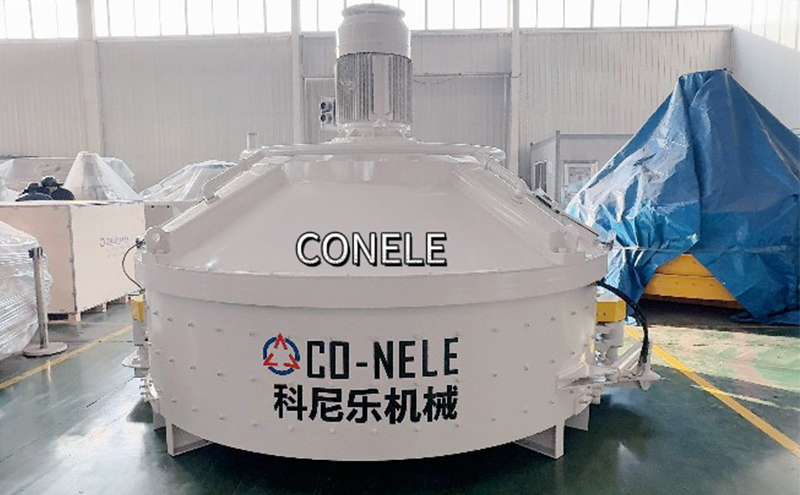
Use this formula to compute the minimum required rated capacity of the planetary mixer, accounting for cycle time and production goals:
Where:
Suppose you need 100 m³/day with a 10-hour operating shift and a mixer cycle time of 3 minutes (0.05 hours):
Note: Always round up to the next standard capacity (e.g., 750L instead of 500L) to account for minor delays (material loading, equipment checks).
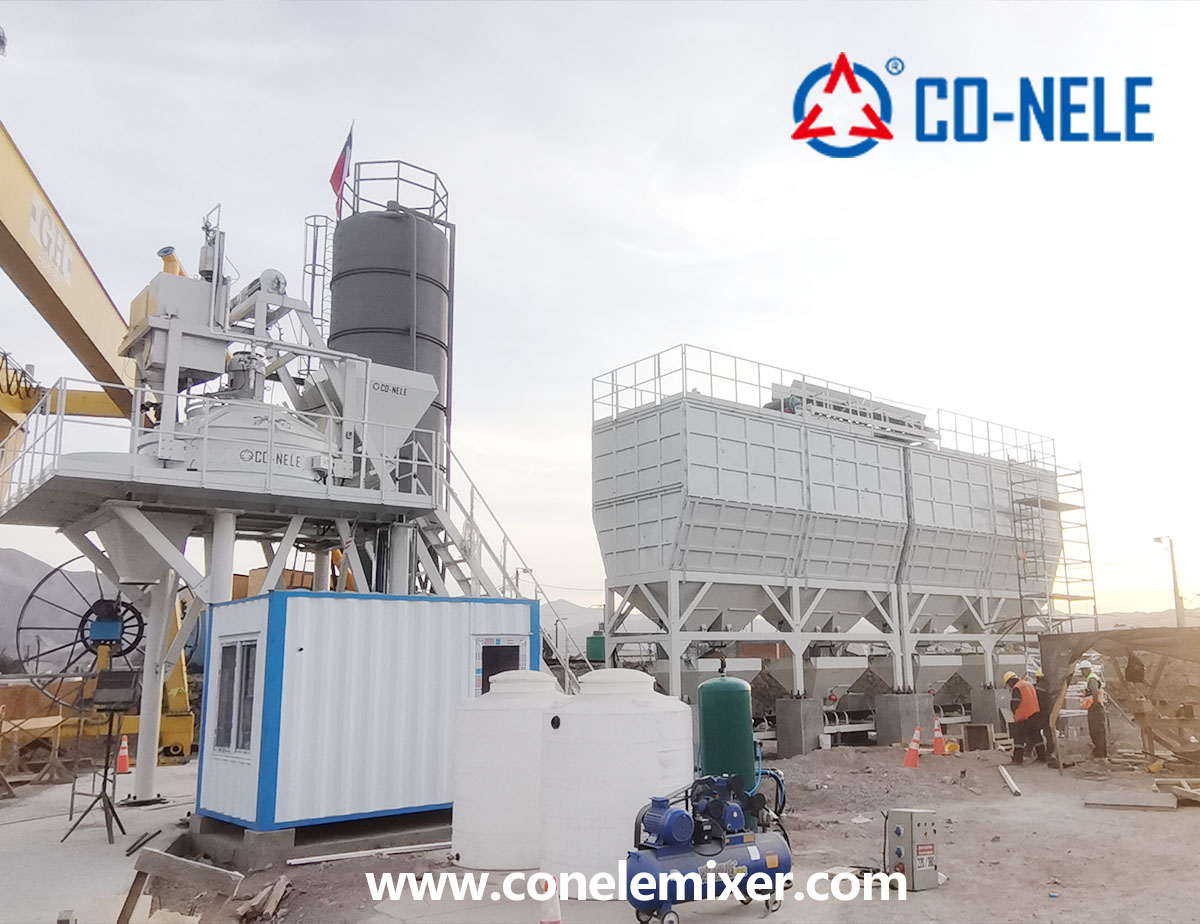
Planetary concrete mixers have two key capacity metrics—rated capacity (RC) and effective working capacity (EWC):
Critical Rule: Never use 100% of the rated capacity for production. For example, a 1000L rated mixer has an effective capacity of ~700–850L.
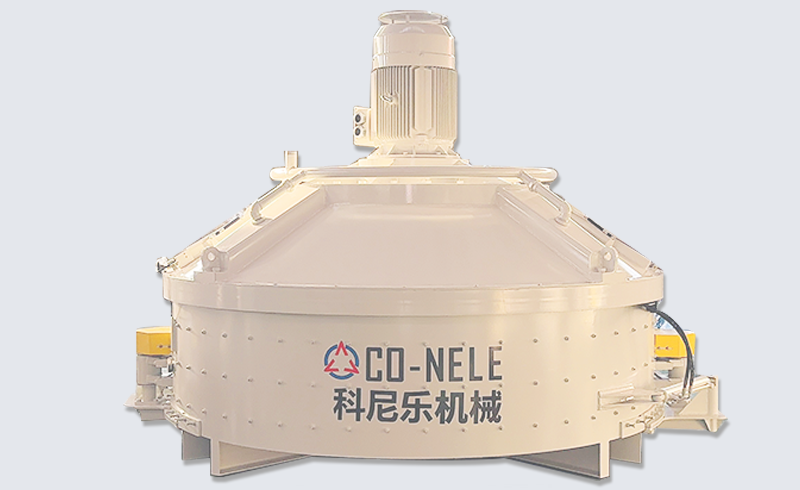
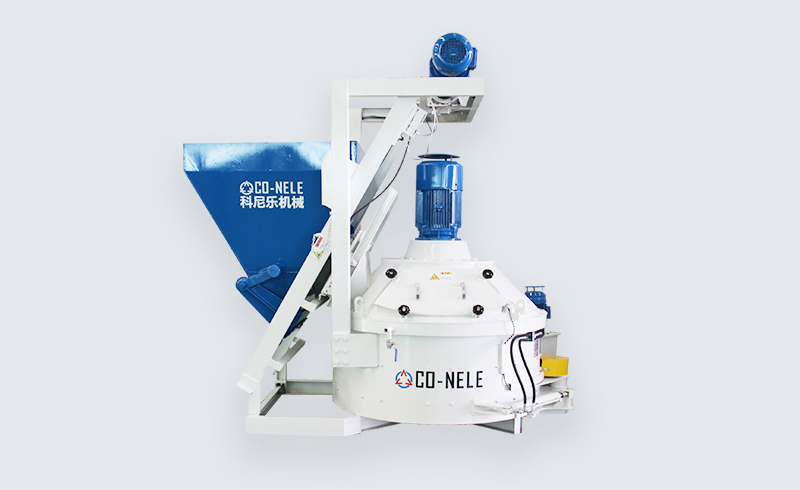
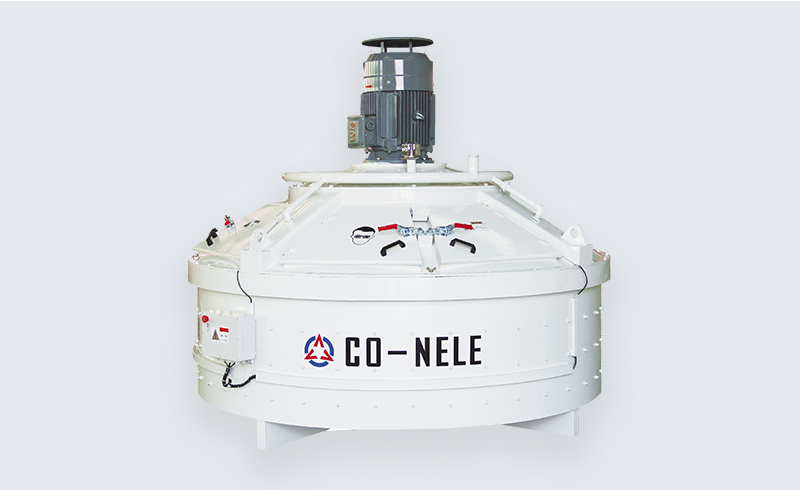
Different concrete types and applications require different capacity ranges—avoid one-size-fits-all selection. CO-NELE offers a full range of CMP series planetary mixers (CMP50 to CMP6000) to cover all scenarios:
| Application/Concrete Type | Recommended Capacity Range | CO-NELE Matching Model | Rationale |
|---|---|---|---|
| Small construction sites, lab testing | 50–500L | CMP50–CMP500 | Low batch volume, precise mixing for small tests |
| General concrete (C10–C60), small precast | 500–1500L | CMP750–CMP1500 | Balances efficiency and cost for small-to-medium batches |
| High-performance concrete (HPC/UHPC), fiber-reinforced concrete | 1500–5000L | CMP2000–CMP5000 | Requires larger effective capacity for uniform dispersion of additives |
| Large precast factories, commercial concrete plants | 3000L+ | CMP3000–CMP6000 | High-volume continuous production |
| Refractory materials, dry mortar | 500–2000L | CMP1000–CMP2000 | Small batches for specialized material mixing |
CO-NELE is a leading manufacturer of planetary concrete mixers with over 20 years of experience, CE certification, and more than 100 national patents. Their CMP series offers a full range of capacities, high mixing uniformity, and reliable performance for various applications. Always consult the manufacturer's technical specifications and production experts. Reputable suppliers like CO-NELE can provide customized capacity recommendations based on your unique production workflow, ensuring optimal performance and cost efficiency.
By following this structured approach, you can select a planetary concrete mixer with the exact capacity needed to meet your production goals while avoiding inefficiencies and unnecessary costs.
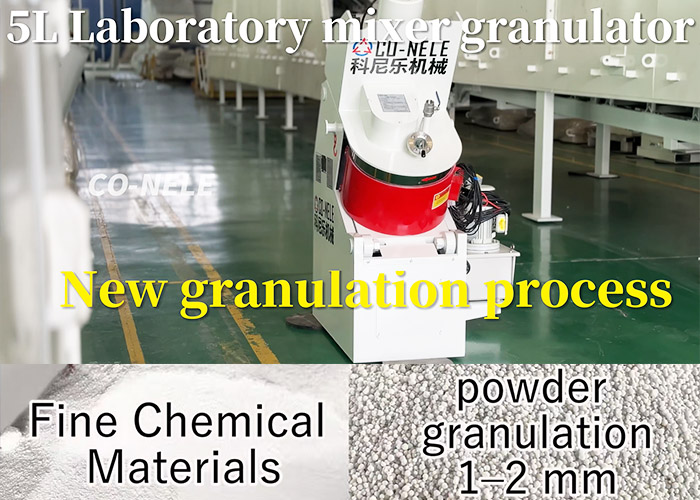
The CO-NELE 5L Lab Mixing Granulator is built precisely for this purpose — transforming fine chemical powders into uniform 1–2 mm granules in approximately five minutes, all within a single compact machine.
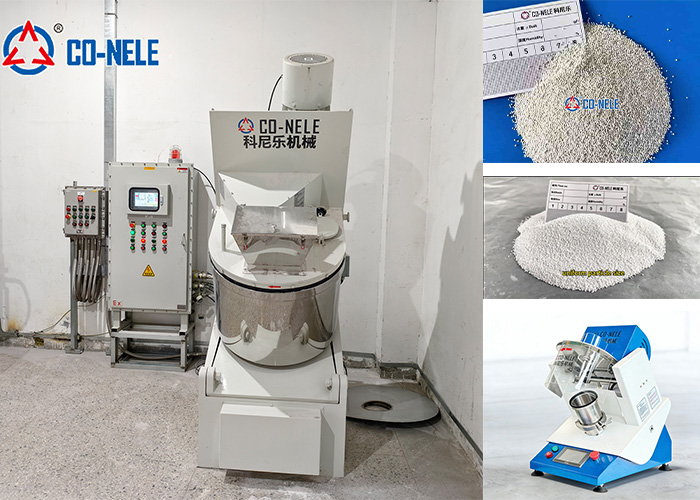
CO-NELE CR08 laboratory small granulator integrates mixing, granulation and coating. Ideal for chemical catalyst precision granulation, trusted by global labs & small-batch manufacturers.
.jpg)
CO-NELE successfully signed a Taiwan, China SiC customer, delivering CR15 100L intensive mixer granulator for 100μm SiC micro powder granulation, meeting high-end production demands.

Our after-sales service is at your disposal for all
questions

We will contact you within 24 hours.

 en
en Search