1. Industry Pain Points in Diamond & Grinding Wheel Production
Traditional mixing equipment cannot meet the high-standard mixing requirements of superhard materials. Most diamond tool and grinding wheel manufacturers face common production problems:
Diamond segregation and delamination: Diamond powder features high density. Ordinary V-type, double-cone and ribbon mixers cause heavy diamond powder to sink and light binder powder to float, resulting in inconsistent wheel hardness, unstable grinding life and cracking risks.
Uneven dispersion of trace additives: Rare earth modifiers, pore-forming agents and lubricants with a proportion of 0.1%–2% cannot be uniformly dispersed by traditional mixers, leading to large batch-to-batch fluctuation of product performance.
Low bonding strength: Poor microscopic mixing leads to exposed diamond particles. The matrix fails to form a complete coating, causing diamond shedding during grinding and cutting, and increasing tool wear.
High loss of precious materials: Open mixing causes serious dust loss of high-value diamond powder. Residual sticking on the tank wall leads to material waste and cross-contamination.
Complicated process flow: Traditional production requires separate processes of dry mixing, wetting and granulation, occupying large workshop space and reducing overall production efficiency.
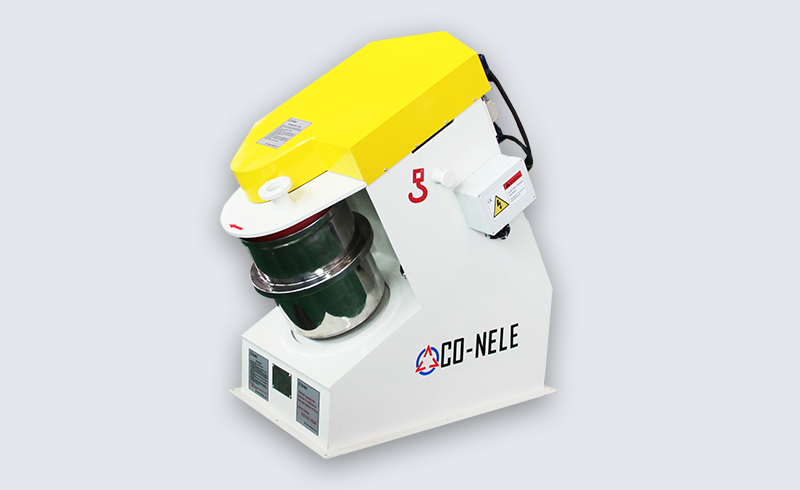
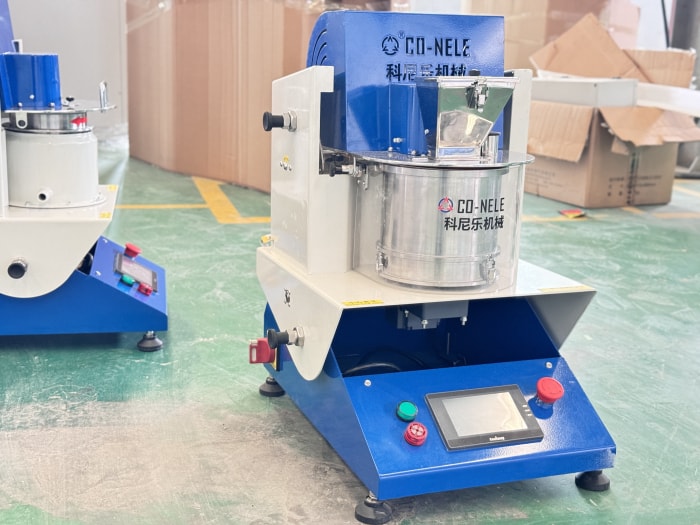
Our inclined intensive mixer adopts an adjustable 40°–60° inclined cylinder + high-speed differential rotor structure. It forms a 3D turbulent mixing field through convection, shearing and diffusion, realizing dead-angle-free homogeneous mixing for diamond formula materials.
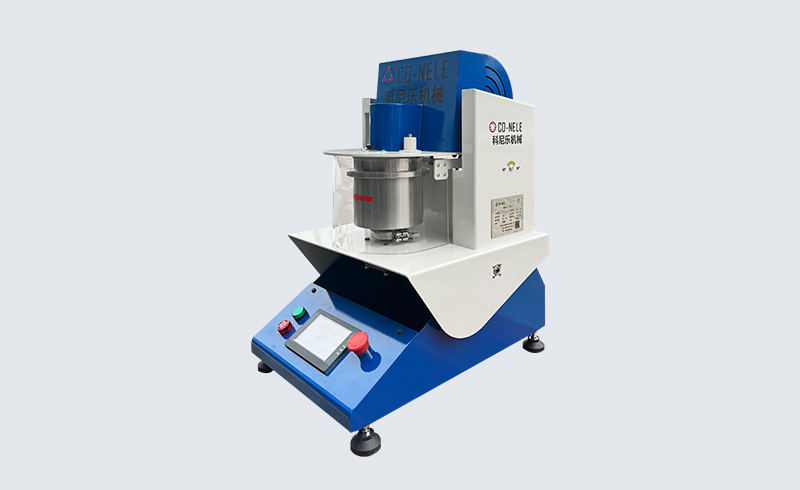
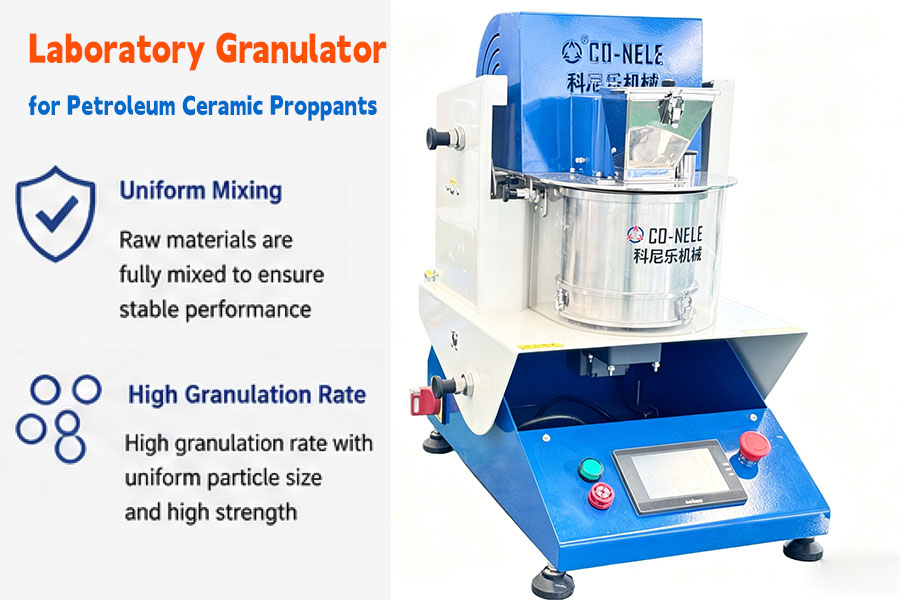
CEL1 Laboratory-scale compact intensive mixer
The inclined cylinder rotates at a low speed to drive continuous up-and-down and axial circulation of materials to avoid diamond sedimentation.
The high-speed differential rotor gently disperses diamond agglomerates without damaging diamond crystal particles.
Full-wear-resistant scraping plates remove sticky materials on the tank wall to ensure 100% material participation in mixing.
Integrated dry mixing, liquid spraying wetting and spherical granulation in one chamber simplifies the whole production process.
3. Core Advantages for Diamond Tools & Grinding Wheels
3.1 Ultra-high Mixing Uniformity with Complete Diamond Coating
The microscopic mixing uniformity reaches up to 99.9%. Diamond powder ranging from 0.5μm to 50μm is fully fused with metal alloy powder, resin binder and ceramic binder. Each diamond particle is evenly wrapped by matrix materials. The finished grinding wheel hardness error is controlled within ±2HV, effectively improving grinding service life by 25%–40%.
3.2 No Segregation, Low Residue & Zero Precious Material Waste
The 3D turbulent mixing structure completely solves the delamination problem of heavy and light powders. The fully closed negative pressure dust removal system reduces diamond dust loss to less than 0.5%. The mirror stainless steel tank and detachable scraper design support quick cleaning and formula switching without cross-contamination, suitable for flexible production of multiple diamond tool and grinding wheel models.
3.3 All-in-one Mixing, Wetting and Granulation
This machine completes dry powder pre-mixing, binder spraying wetting and dense spherical granulation in a single process. The produced granules feature high sphericity and excellent fluidity, effectively avoiding bridging during automatic pressing. The consistent green body density ensures uniform pore distribution after sintering, improving the yield rate of high-precision grinding wheels.
Material contact parts adopt 316L mirror stainless steel or tungsten carbide wear-resistant lining, which resists strong abrasion of diamond powder and avoids metal impurity pollution. Optional vacuum defoaming configuration eliminates internal bubbles of powder materials, meeting the production standards of ultra-thin cutting wheels and semiconductor wafer grinding wheels.
3.5 Intelligent Automatic Control & Global Standard Adaptation
Equipped with frequency conversion speed regulation and digital control system, it stores more than 100 sets of mature diamond formulas. The machine supports multi-country voltage standards and has passed CE and ISO certifications, perfectly adapting to factory production in Europe, Southeast Asia, America and the Middle East.
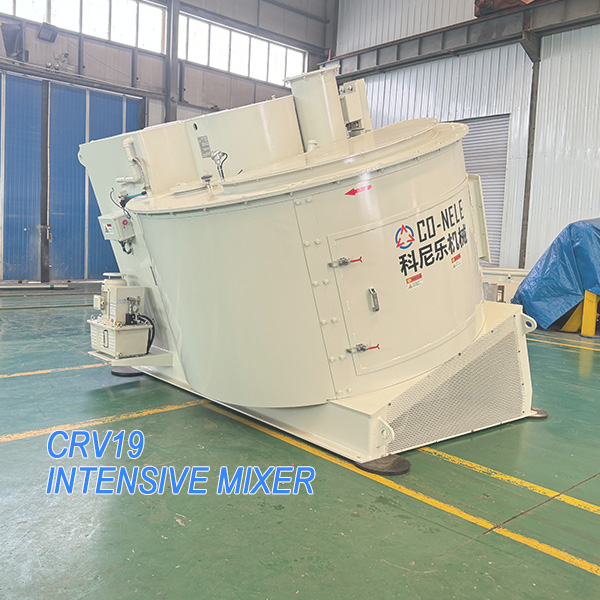
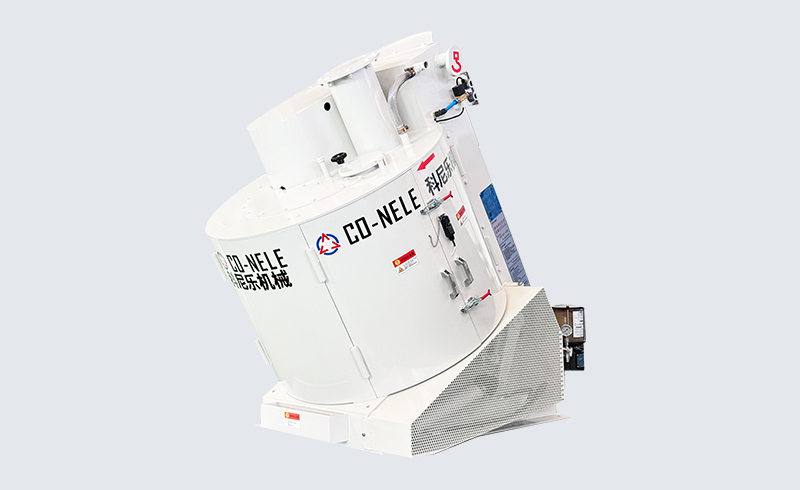
CRV19 Intensive mixer for diamond grinding wheel powder mixing
Southeast Asia (Vietnam, Thailand, India): Solved powder segregation and short service life problems of diamond saw blade production, reducing diamond material loss and improving product stability.
Europe (Germany, Poland): Vacuum type inclined mixers are applied in high-precision wafer grinding wheel production, meeting EU high-precision manufacturing standards with complete CE certification documents.
Domestic Superhard Material Enterprises: Fully automatic mixing and granulation production lines help manufacturers realize intelligent production and greatly increase output efficiency.
Customization: Volume adjustment, wear-resistant upgrade, vacuum system and automatic line customization
Global Support: 1-year warranty, overseas technical guidance and fast spare parts supply
Free Service: Free material test, process formula solution and installation training
8. Get Free Quotation & Solution
If you are looking for a high-performancediamond tool powder mixer and granulator, contact us now to obtain the latest quotation, production site video, professional process solution and free material testing service.
Back To The List
Related News
2026.7.14
Qingdao CO‑NELE Delivers Advanced Intensive Mixer‑Granulators for PM, MIM, Magnetic‑Materials and Additive‑Manufacturing Industries
Founded in 2004, Qingdao CO‑NELE Machinery develops CEL laboratory‑type intensive mixers and CR‑CRV inclined intensive mixer‑granulators with 3‑D counter‑current mixing‑granulation technology, solving powder segregation and uneven‑particle‑size problems f
2026.7.11
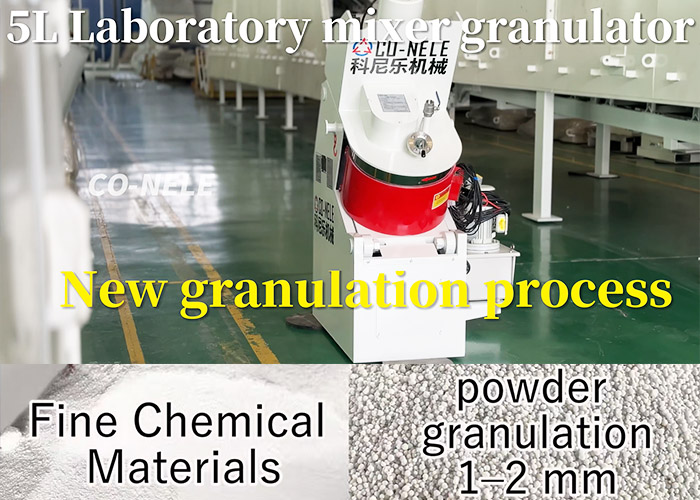
5L Lab Mixing Granulator for Fine Chemical Materials with 5 Minutes
The CO-NELE 5L Lab Mixing Granulator is built precisely for this purpose — transforming fine chemical powders into uniform 1–2 mm granules in approximately five minutes, all within a single compact machine.
2026.6.16
Chemical Catalyst Granulation | CO-NELE CR08 Lab Small Granulator
CO-NELE CR08 laboratory small granulator integrates mixing, granulation and coating. Ideal for chemical catalyst precision granulation, trusted by global labs & small-batch manufacturers.
Related Products
CO-NELEceramic powder granulator is a high-performance integrated system combining mixing,wetting,granulation,and densification.Specifically designed for fine ceramic powders,it is suitable for processing:
-Alumina(Al₂O₃) -Silicon Carbide(SiC) -Zirconia(ZrO₂) -Mullite -Silicon Nitride(Si₃N₄) -Porous Ceramics/Electronic Ceramic Powders Based on the principle of intensive mixing and granulation,this equipment achieves a high granulation rate,a narrow particle size distribution,and excellent flowability.
It adopts a structural design to industry-leading"Intensive Mixers,"featuring: ·An inclined mixing pan ·An eccentric high-speed rotor ·A stationary scraper
This configuration generates a three-dimensional compound motion,enabling:
Rapid and homogeneous dispersion of powders Precise liquid addition and wetting control Stable nucleation and particle growth Formation of high-strength,dense granules Application Fields:Oxide ceramics,non-oxide ceramics,refractory materials,sanitary ceramics,structural ceramics,etc. Compared to traditional spray drying or inefficient mixing equipment,CO-NELE granulatorsoffer significant advantages in terms of particle size control,granulation rate,and uniformity,making them a critical piece of equipment for the preparation of high-end ceramic powders.
Ceramic Granulator Delivers Accurate Regulation on Granulation Rate and Particle-Size Distribution
It acts as a viable substitute for conventional spray granulation techniques and cuts overall energy consumption by more than 30%.
Parameter
Technical Index
Granulation Rate
90%-98%
Qualified Particle Ratio
≥85%
Available Particle-Size Range
0.1–5 mm with flexible adjustment
Particle-Size Tolerance
≤ ±0.2 mm
Frequently Asked Questions (FAQ)
Q1:What is the production capacity range of CO-NELE ceramic granulators?Can they meet the requirements of my production line?
A:We offer a full range of models,spanning from laboratory-scale testing to industrial-scale production: Laboratory Models:0.05-25kg/batch Mid-scale Production Models:50-300kg/h Large-scale Industrial Models:500kg–5t/h The CO-NELE granulator series covers a volume range of 1 liter to 7,000 liters;models can be customized and selected based on the client's actual production capacity requirements.
Q2:Is the process scalable from the laboratory stage to mass production?
A:Yes.By employing a proportional structural design combined with identical process logic,linear scalability is achieved: ✔Consistent granulation rate ✔Stable particle size distribution ✔Low scale-up risk At theCO-NELETesting Center,experienced engineers collaborate with users to optimize process steps,ensuring a high degree of consistency in both granulation rate and particle size distribution from the laboratory stage to full-scale production,thereby significantly mitigating scale-up risks.
Q3:Can CO-NELEintensive mixers process fibrous materials or systems involving organic solvents?
A:Yes.CO-NELEintensive mixers demonstrate exceptional performance in the preparation of fibrous materials;they are suitable for the fiber separation and coating processes involved in the production of carbon ceramics and fiber-reinforced ceramics.



 en
en Search